
Cloud Hosting in Nigeria: What Businesses Need to Know
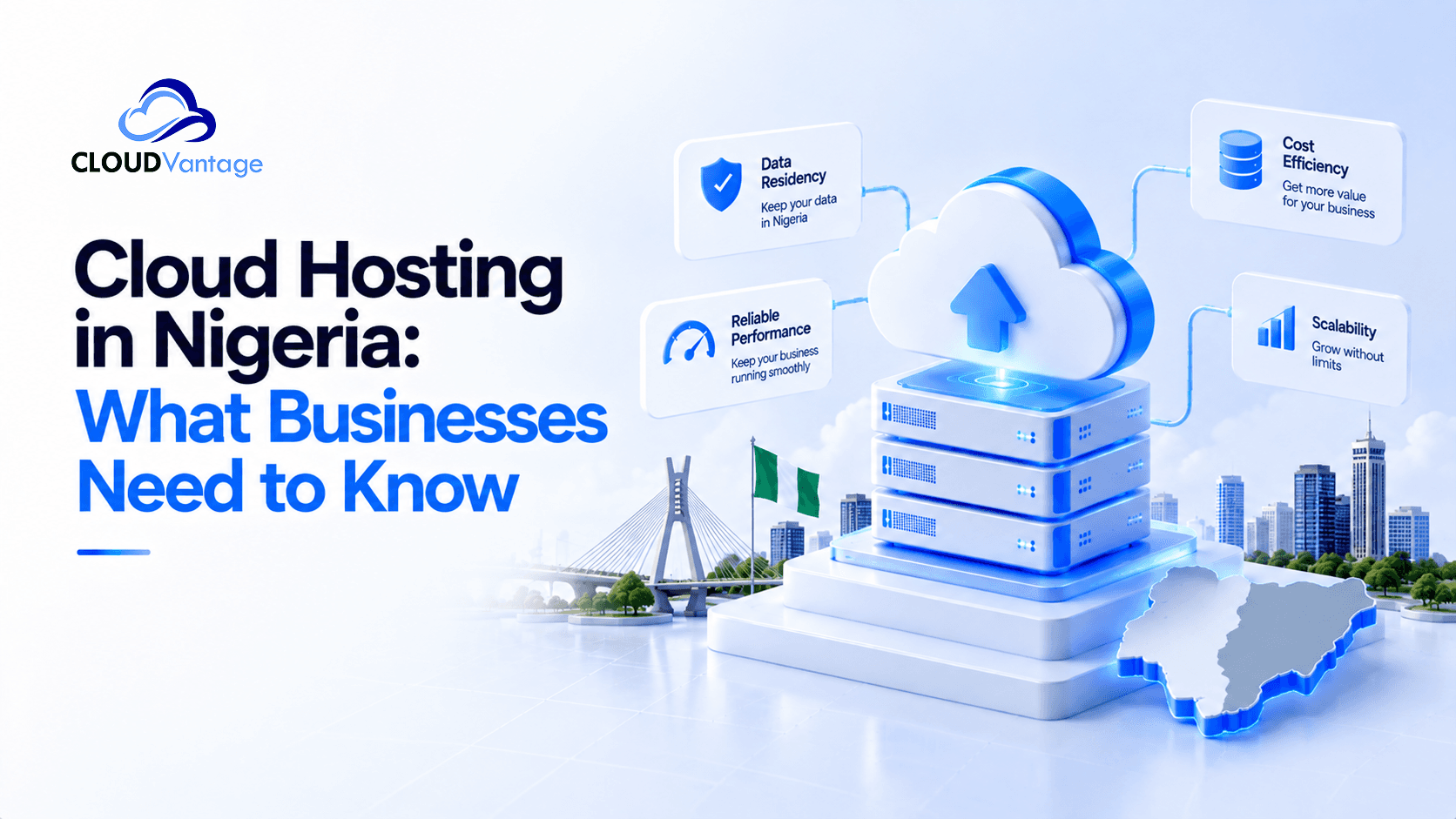
Businesses need infrastructure that can support growth without making technology unnecessarily complex.
That is why more businesses are exploring cloud hosting in Nigeria. But choosing the right solution involves more than comparing prices. Performance, security, scalability, infrastructure location, support, and reliability all matter.
So, what should your business consider before choosing a cloud hosting solution?
What Is Cloud Hosting?
Cloud hosting allows your website, application, database, or business workload to run on cloud infrastructure instead of relying on a single physical server.
Depending on the platform, businesses can access resources and services such as:
- Virtual servers
- Cloud storage
- Managed databases
- Load balancing
- Auto scaling
- Backup and disaster recovery
This gives businesses the flexibility to deploy resources based on their needs and scale as those needs change.
Why Does Cloud Hosting Matter in Nigeria?
For Nigerian businesses, cloud hosting can provide flexible infrastructure without the cost and complexity of maintaining physical servers.
Where your infrastructure is located also matters.
Infrastructure hosted closer to your users can help reduce latency and improve application responsiveness. Local infrastructure can also give businesses greater control over where their data is hosted and processed.
For organizations with security, regulatory, or data residency requirements, these considerations can be especially important.
What Should You Look for in a Cloud Hosting Provider?
Performance and Reliability
Look for high-performance infrastructure, reliable connectivity, strong uptime commitments, monitoring, and high-availability capabilities.
Scalability
Your infrastructure should grow with your business. Features such as flexible compute, auto scaling, and load balancing can help you handle changing demand.
Security
Consider the provider's approach to access control, data protection, monitoring, backups, disaster recovery, and compliance.
Local Support
When your infrastructure affects your business, getting help quickly matters. Local technical expertise can make deployment, troubleshooting, and migration easier.
Transparent Pricing
Don't compare providers based only on their starting server price. Consider compute, storage, bandwidth, backups, databases, support, and scaling costs.
How Much Does Cloud Hosting Cost in Nigeria?
There is no fixed price for cloud hosting.
A small business website may require far fewer resources than an e-commerce platform, SaaS application, or enterprise workload.
Your total cost can depend on:
- Compute resources
- Storage
- Bandwidth
- Backups
- Databases
- Additional services
When comparing cloud hosting prices in Nigeria, look at the total cost of running your workload, not just the advertised server price.
Cloud Hosting vs Traditional Hosting
The biggest difference is flexibility.
| Traditional Hosting | Cloud Hosting |
|---|---|
| Often uses fixed resources | Resources can be adjusted. |
| Scaling can require manual changes. | Scaling can be automated. |
| Limited infrastructure flexibility | Flexible infrastructure options |
| Often centered around a single server | Can use multiple cloud resources |
For businesses experiencing changing traffic or planning to scale, cloud hosting can provide greater flexibility.
Who Can Benefit From Cloud Hosting?
Cloud hosting can support businesses at different stages.
Startups and SMEs: Flexible infrastructure without significant investment in physical servers.
E-commerce: Infrastructure that can handle changing traffic and customer demand.
Technology Companies: Scalable infrastructure for applications, APIs, and SaaS platforms.
Enterprises: Infrastructure designed for high availability, security, scalability, backup, and disaster recovery.
Why Businesses Choose CloudVantage
CloudVantage gives businesses access to flexible, high-performance infrastructure designed to support everything from growing websites and applications to enterprise workloads.
The platform brings together:
- Virtual servers
- Cloud hosting
- Object storage
- Managed databases
- Load balancers
- Auto scaling
- Backup and disaster recovery
- Cloud migration
- Colocation
With Nigeria-based infrastructure, local technical support, cloud automation, and a 99.99% uptime SLA, businesses can deploy and manage their workloads with greater flexibility and confidence.
Whether you're launching a new application, moving existing workloads, or preparing for growth, CloudVantage provides the infrastructure and support to help you get there.
Explore CloudVantage | Talk to a Cloud Expert
How to Choose the Right Cloud Hosting Provider
Before choosing a provider, ask:
- Where is the infrastructure located?
- What uptime SLA is offered?
- How is my data protected?
- Can I scale as my business grows?
- Is pricing transparent?
- What technical support is available?
- Can the provider support migration and disaster recovery?
- Does the infrastructure meet my security and compliance requirements?
The right solution should fit your technical requirements, business goals, and growth plans.
Frequently Asked Questions
What is cloud hosting in Nigeria?
Cloud hosting in Nigeria involves running websites, applications, data, and other workloads on cloud infrastructure serving businesses in Nigeria. The infrastructure may be located within Nigeria or in another region, depending on the provider.
How much does cloud hosting cost in Nigeria?
Costs depend on the compute, storage, bandwidth, databases, backups, and other resources required by your workload.
Is cloud hosting suitable for small businesses?
Yes. Cloud hosting can provide flexible infrastructure that grows alongside your business.
Can I migrate my existing application to CloudVantage?
Yes. Existing applications and workloads can be migrated to CloudVantage, with the migration approach depending on your current infrastructure and requirements.
Is local cloud hosting secure?
Security depends on the provider's infrastructure, controls, and how the customer's environment is configured. Businesses should evaluate security, access controls, data protection, backups, and compliance when choosing a provider.
Ready to Move Your Business to the Cloud?
Build on infrastructure designed to support your business today and as you grow.
Deploy, scale, and manage your workloads with CloudVantage.